












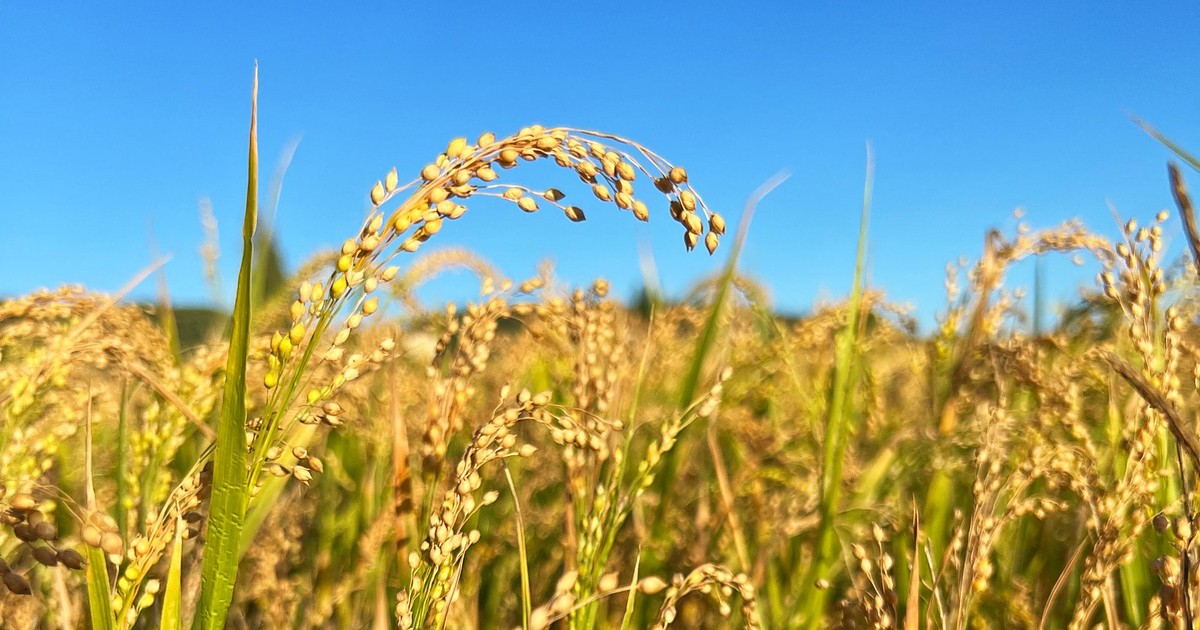
Did you know? Fun Facts
The Return of Ancient Grains: The Revival of Millet
In the agricultural and nutritional landscape of the 21st century, we are witnessing a fascinating paradox: to move towards a sustainable future, we need to look back, far back in time. Hidden within the history of agriculture is a family of cereals that nourished humanity for thousands of years before being pushed aside by the Green Revolution: millet. Often unfairly labelled as “bird food” or a “poor man’s grain,” millet is experiencing a global revival, celebrated also by the United Nations, which declared 2023 the International Year of Millets. But what makes these tiny seeds so special, and why could they represent a key resource for modern Italian agriculture? Let’s explore it together in this article.
The term “millet” does not refer to a single plant, but is a generic name used to describe a diverse group of small-seeded grasses belonging to the Poaceae family (1).
Archaeobotanical evidence tells us that millet was one of the earliest domesticated crops. In northern China, foxtail millet (Setaria italica) and broomcorn or proso millet (Panicum miliaceum) were already being cultivated 8,000 years ago, becoming the foundation of the first Chinese agricultural societies long before rice took over. Millet was so important that at the roots of Chinese civilisation stands the mythical figure of Houji, the “Lord of Millet,” whose agricultural genius not only fed the Chinese people but also established this cereal as a sacred pillar of national identity (1).
At the same time, independent domestication processes were taking place in Africa and India. Pearl millet (Pennisetum glaucum), today the most widely cultivated millet in the world, originated in the Sahel region of West Africa, probably more than 5,000 years ago. Finger millet (Eleusine coracana), known for its shape resembling the fingers of a hand, originated in the highlands between Ethiopia and Uganda (2). India also has an ancient history of millet cultivation: sacred texts such as the Yajurveda mention varieties such as foxtail millet, known as priyangava, as early as the Indian Bronze Age (1).
Its arrival in Europe and the Mediterranean is equally ancient. Contrary to what was previously believed, millet cultivation in Europe may date back to the Bronze Age, around 3,500 years ago, becoming widespread in Central and Eastern Europe. The Romans and Greeks were well acquainted with it; millet was a staple food, used to make bread and porridges long before maize arrived from the Americas and revolutionised the European diet. Over the centuries, however, and particularly with the rise of modern intensive agriculture, which favoured wheat, rice and maize, millet production declined dramatically, relegating it to a marginal or forage crop.
For a better understanding, millet can be divided into two groups according to seed size and economic importance: major millets and minor millets.
Among the major millets, the most representative is pearl millet, which accounts for approximately 46% of global millet production. It is a vital crop for food security in Africa and Asia. Sorghum (Sorghum bicolor) is also included in this group. Although it is often treated separately, it functionally belongs to the same category of drought-resistant cereals.
Among the minor millets, we find finger millet, known for its exceptionally high calcium content; proso millet, a variety also cultivated at our Podere Pereto farm, which is historically the most widespread millet in the West and in Italy. This group also includes foxtail millet, kodo millet (Paspalum scrobiculatum), as well as barnyard millet and little millet.
From a structural perspective, millet grains have unique characteristics. While most cereals are caryopses, in which the pericarp is fused to the seed, finger millet is a utricle, in which the pericarp forms a membranous sac that can be easily detached (3). This structural diversity influences processing, making it less complex.
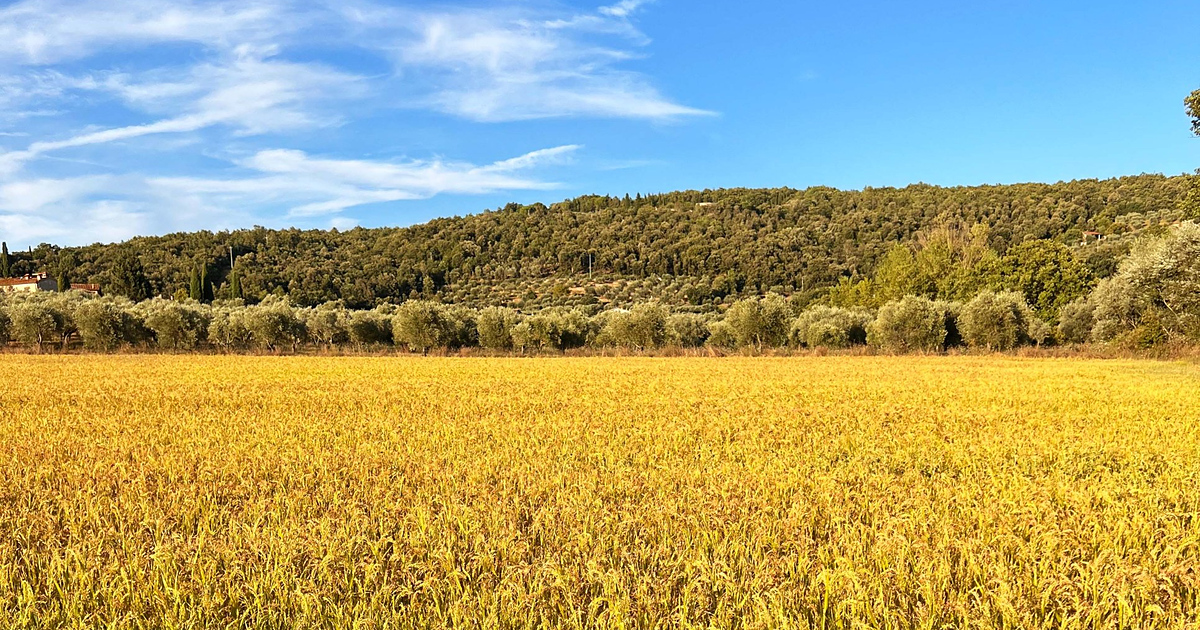
If the history of millet is fascinating, its nutritional profile is what truly justifies its return to our tables. Millets offer significant advantages compared with modern refined cereals. They provide energy in amounts comparable to, and sometimes greater than, rice and wheat. Their carbohydrate content ranges from 60% to 70%, but it is the quality of these carbohydrates that makes the difference: they are rich in resistant starch and dietary fibre.
The fat content of millet, ranging from 1.5% to 5%, is higher than that of many other cereals and consists predominantly of beneficial unsaturated fatty acids, such as linoleic acid. Its protein content is also noteworthy, ranging from 7% to 11%, with some proso millet varieties reaching 12.5%. Although, like many cereals, millet is relatively low in the amino acid lysine, its proteins are often richer in methionine than those of sorghum and have an overall well-balanced amino acid profile (4). A crucial characteristic for the modern market is that all millet varieties are naturally gluten-free (6). This makes them suitable for people with coeliac disease and an excellent alternative for those looking to diversify the cereals in their diet, offering a texture and flavour suitable for a wide range of preparations, from baked goods to pasta.
Among cereals, millet is a true mineral powerhouse. It is in micronutrients that millet really stands out, particularly for its calcium content. Finger millet is a true “superfood” when it comes to calcium, containing approximately 350 mg per 100 g, an amount many times higher than that found in rice (33 mg) or wheat (30 mg). This makes it a valuable food for bone health, especially in dairy-free diets. Millets are also excellent sources of iron, zinc, magnesium and phosphorus, often exceeding maize and wheat in mineral density (5).
In vitro studies have shown that millet extracts possess high antioxidant capacity, acting as free-radical scavengers and metal chelators (7). Interestingly, pigmented millet varieties, such as brown or black millet, generally have much higher phenolic content and antioxidant activity than white or cream-coloured varieties. The presence of tannins in the seed coat contributes significantly to this activity. Although tannins are often considered “antinutrients” because they can reduce protein digestibility, recent research suggests that, in moderate amounts, they may provide health benefits by acting as biological antioxidants (3, 8).
Scientific evidence suggests that regular millet consumption may have positive effects on several modern health conditions, including diabetes and cardiovascular disease. With regard to diabetes, millet has a relatively low glycaemic index. The phenolic compounds found in millet, particularly in the seed coat, inhibit enzymes such as alpha-glucosidase and pancreatic amylase, slowing carbohydrate absorption and reducing postprandial blood glucose spikes. Studies in diabetic rats have shown that a finger millet-based diet can help control glucose levels and accelerate wound healing (5). Regarding cardiovascular health, millet consumption has been associated with reduced blood triglyceride levels (6).
Italy, with its rich agricultural and culinary traditions, is now facing unprecedented climate challenges. Recurring droughts and rising temperatures are threatening traditional crops such as maize and rice, particularly in the Po Valley. This is where millet could play a fundamental role in the country’s agricultural future.
Millet is a C4 crop, meaning that it possesses a biological adaptation that gives it greater photosynthetic efficiency and allows it to require much less water than wheat. It is a hardy crop, capable of growing in poor soils and withstanding high temperatures and water stress that would severely affect other crops. It also has a short growing season of 3–4 months, allowing for flexible crop rotations (6). In an Italy increasingly confronted with water scarcity, reintroducing millet on a large scale could represent an intelligent climate adaptation strategy.
Millet is not foreign to Italian cuisine; polenta, today a symbol of maize, was originally made with millet and other minor cereals before the discovery of America. There is enormous potential in rediscovering these culinary roots and reinterpreting them in a modern way. Furthermore, the growing demand for functional and nutraceutical foods opens the door to using millet not only as a staple food, but also as a wellness ingredient, thanks to its potential hypoglycaemic and antioxidant properties.
Millet is not simply a relic of our agricultural past, but a strategic resource for the future. Its exceptional nutritional characteristics, from its richness in calcium and fibre to its balanced protein profile, combined with nutraceutical properties that may help counter diabetes and oxidative stress, make it an ideal food for modern health. But it is its agronomic resilience that makes it indispensable: in a world that is becoming warmer and drier, millet offers a way to help ensure food security with a reduced environmental impact.
For Italy, the return of millet is not simply an agricultural curiosity, but a genuine opportunity for renewal: a chance to diversify our farmland, innovate the health-food sector and reclaim a deeply sustainable form of food sovereignty. It is a vision that we at Podere Pereto have believed in from the very beginning.
For years, our fields have welcomed the resilient ears of this ancient cereal. But we have not stopped at cultivation alone. Driven by the desire to make an ever-growing audience fall in love with this forgotten treasure, we have joined forces with academic institutions of excellence in our region. Through research projects carried out alongside Tuscan universities, we are exploring the endless potential of millet: studying its delicate sensory characteristics and its surprising suitability for breadmaking, with the aim of developing innovative products that combine the taste of tradition with the demands of modern wellbeing.
For us at Podere Pereto, after all, it is not simply a matter of sowing an alternative cereal. It is about embracing and promoting an agricultural philosophy guided by biodiversity and resilience. As today’s science reminds us, the key to feeding tomorrow’s world may lie precisely in our ability to listen to the land, rediscovering and giving new dignity to these invaluable “ancient grains.”
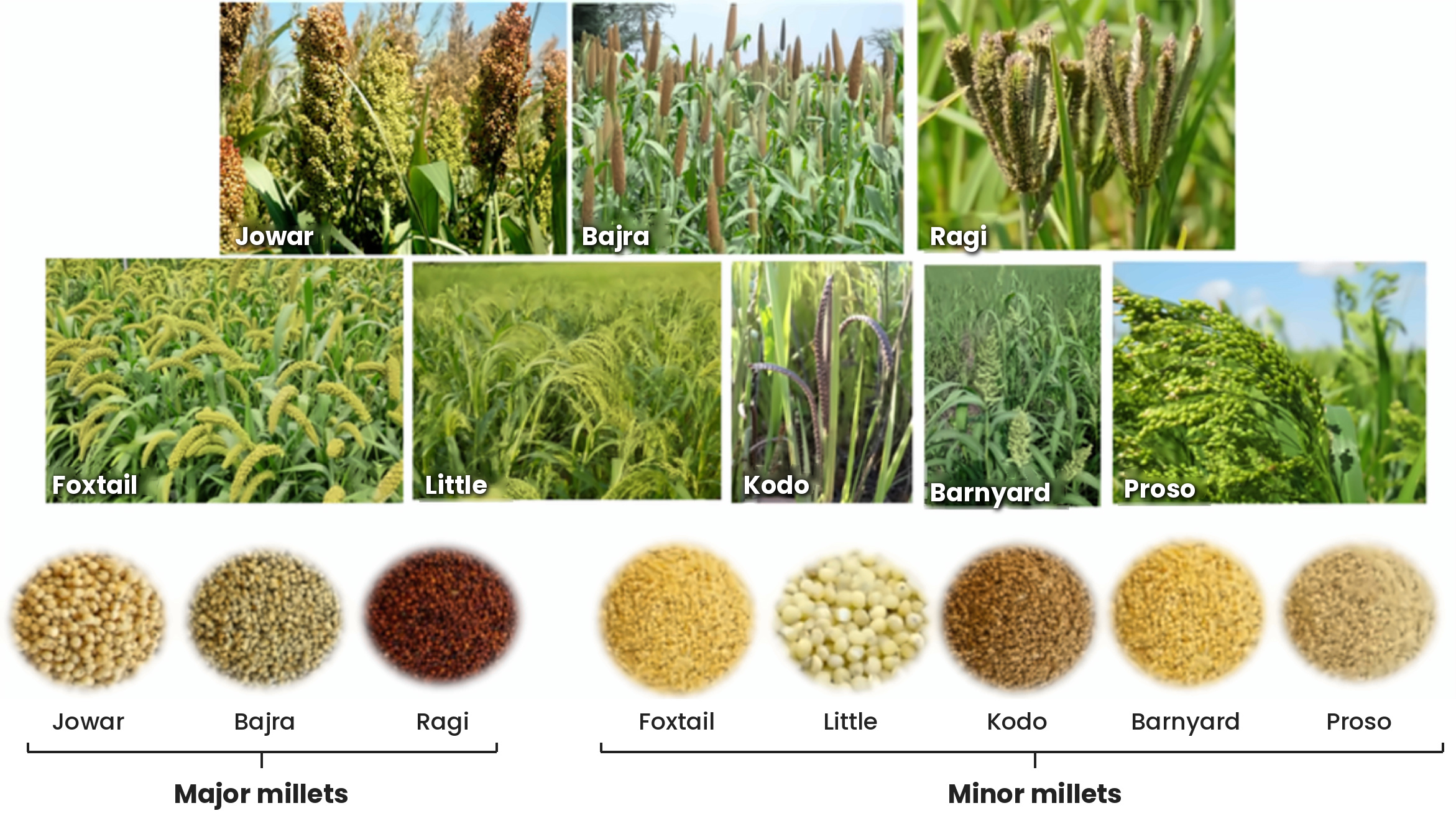
Figure 1 – Millets constitute a highly diverse group of plants belonging to the Poaceae family. They are generally divided into two broad categories: “Major Millets” and “Minor Millets.” In Italy, the most widely cultivated species is common or proso millet (Panicum miliaceum). At Az. Agr. Podere Pereto, we also cultivate this species with passion, working to increasingly promote and enhance this ancient cereal, which has unique nutritional and agronomic characteristics. Image taken from Monika Mahajan et al., 2024 (9).
References:
1. Tripathi, T. & Vyas, Dr. S. From ancient grains to modern solutions: A history of millets and their significance in agriculture and food security. Int. J. Home Sci. 9, 72–78 (2023).
2. Sorghum and Millets- Chemistry and Technology. Edited by David A. V. Dendy Grains After Harvest Upton, Oxford, United Kingdom. Published by the American Association of Cereal Chemists, Inc. St. Paul, Minnesota, USA
3. Siwela, M., Taylor, J. R. N., De Milliano, W. A. J. & Duodu, K. G. Occurrence and Location of Tannins in Finger Millet Grain and Antioxidant Activity of Different Grain Types. Cereal Chem 84, 169–174 (2007).
4. Hassan, Z. M., Sebola, N. A. & Mabelebele, M. The nutritional use of millet grain for food and feed: a review. Agric & Food Secur 10, 16 (2021).
5. Shahidi, F. & Chandrasekara, A. Millet grain phenolics and their role in disease risk reduction and health promotion: A review. Journal of Functional Foods 5, 570–581 (2013).
6. Saleh, A. S. M., Zhang, Q., Chen, J. & Shen, Q. Millet Grains: Nutritional Quality, Processing, and Potential Health Benefits. Comp Rev Food Sci Food Safe 12, 281–295 (2013).
7. Chandrasekara, A. & Shahidi, F. Content of Insoluble Bound Phenolics in Millets and Their Contribution to Antioxidant Capacity. J. Agric. Food Chem. 58, 6706–6714 (2010).
8. Hagerman, A. E. et al. High Molecular Weight Plant Polyphenolics (Tannins) as Biological Antioxidants. J. Agric. Food Chem. 46, 1887–1892 (1998).
9. Monika Mahajan, Prabhjot Singla, Sucheta Sharma. Sustainable postharvest processing methods for millets: A review on its value-added products. J.of Food process engin. 47, Issue 1, January 2024